
Motorcycle paintwork – overview of costs, parts and painting methods

Whether for visual or protective reasons – a professional paint job enhances every motorcycle. If you want topaint yourmotorcycle engine or redesign the entire fairing, you’ve come to the right place. We explain everything you need to know about paint jobs to customize your motorcycle perfectly to your liking.
A paint job not only protects your motorcycle from external influences such as the weather or stone chips, but also gives it an individual touch. Whether a classic look, modern look or unusual design – with the right paint job, your motorcycle will be a real eye-catcher. Various techniques and color combinations are available to achieve the desired result.
The MYCOVER® team clarifies!
Table of Contents
- Motorradteile und Materialien für Motorrad Lackierungen im Überblick
- Motorcycle paintwork – individual design options
- Important tips and advice for your motorcycle paint job
- Motorcycle painters – experts for the perfect paint job
- Motorrad Lackierung Farben: Vielfältige Möglichkeiten für jeden Stil
- The right color choice for your motorcycle paint job
- Conclusion: Perfect paintwork for every motorcycle
- FAQ – Frequently asked questions about motorcycle painting

The various motorcycle parts and materials for motorcycle paintwork at a glance
Painting motorcycle helmets – the right way to do it
A harmonious look starts with the helmet. That’s why you can paint your motorcycle helmet or implement individual designs. If you want to have it done professionally, you can have your motorcycle helmet painted. A custom-painted helmet not only ensures a uniform overall look with the motorcycle, but also contributes to safety. Reflective paints or fluorescent colors improve visibility in road traffic, especially at night, and thus ensure a unique look.
Have rims and brake calipers painted
Customized rims give the motorcycle a unique style. Most professionals offer to have motorcycle rims painted. It is also possible to have your motorcycle brake caliper painted. Color accents on the rims or brake calipers can emphasize the sporty character of your motorcycle. From matt black to bright neon colors – the possibilities are almost endless. A special heat-resistant paint finish can also ensure a long service life.
Painting the cladding and frame for the perfect look
Having the motorcycle fairing painted requires experience and precise work. It is also possible to have the motorcycle frame painted to perfect the overall appearance of your motorcycle. A new paint job on the fairing can change the entire appearance of a motorcycle. Whether metallic paint, matt paint or a customized design. Think carefully beforehand about which look you like best, do some research on the internet or get inspiration from other motorcycle enthusiasts.
Motorcycle paintwork for the tank
Due to its central location, the tank is often the highlight of a motorcycle. Whether you are looking for motorcycle tank painting or special motorcycle tank painting, you will quickly find what you need at most mechanics and specialists. We also offer solutions for the opposite, if you want to remove the motorcycle tank paint, here are two options:
- Chemical paint stripper: Special paint removers soften the old paint so that it can be easily removed with a spatula or brush. This method is particularly suitable for sensitive surfaces as it does not damage the metal. It is important to clean thoroughly after use to remove the chemical residues.
- Manual or mechanical sanding: Sandpaper or a random orbital sander can be used to remove the paint mechanically. This method requires patience and precision, but is a cost-effective alternative without the use of chemicals. After sanding, the surface should be carefully cleaned and prepared for the new coating.
If you are looking for a new look but want to preserve the paintwork, a motorcycle tank paint protection film is an ideal solution. This protects the paintwork from scratches and other external influences and ensures that the tank looks like new for a long time. An additional advantage here is that the film is much easier to change than the solid paint.
Paint the exhaust and manifold correctly
Motorcycle exhaust painting and motorcycle manifold painting require special heat-resistant paints due to the location. Thorough preparation is crucial before painting: first, rust and old paint residue should be removed by sanding or sandblasting. The surface must then be degreased and made dust-free to ensure optimum adhesion of the paint. When applying the paint, it is also important to spray several thin coats evenly from a distance of around 20-30 cm from the exhaust or manifold in order to avoid flow and uneven spots. After drying, the stoving phase takes place, this can be done either simply by running the motor or in the oven to complete the paint curing process.
When painting motorcycle exhausts and manifolds, only heat-resistant paints should be used, as these can withstand extreme temperatures. High-temperature spray can paints are recommended as motorcycle exhaust paints with a heat resistance of 600 to 1200 °C, as this prevents peeling and discoloration. After application, it must either be baked on by running the engine or cured in the oven to achieve the full protective effect.
Motorcycle paintwork for plastic parts: how to achieve the perfect look
If you want to paint plastic motorcycle parts, you should ensure careful preparation and use the right materials. It is particularly important to use special adhesion promoters when painting plastic motorcycles, as this is the only way to ensure a permanent bond between the paint and the surface. If you want to paint plastic motorcycles, you should first thoroughly clean, degrease and, if necessary, sand them so that the paint adheres optimally. A high-quality plastic primer is also recommended as a base for painting motorcycle plastic parts. If you have plastic motorcycle parts painted or do it yourself, you should therefore choose a suitable paint for motorcycle plastic that is flexible, UV-resistant and weatherproof – so the look lasts for a long time.

Motorcycle paintwork – individual design options for your motorcycle
Whether classic or modern – motorcycle paintwork offers numerous design options. A motorcycle paint job can be simple or extravagant, depending on the rider’s personal taste and style. With a high-quality motorcycle paint job, the Motorcycle can be visually enhanced and customized – so you stand out 100% on the road.
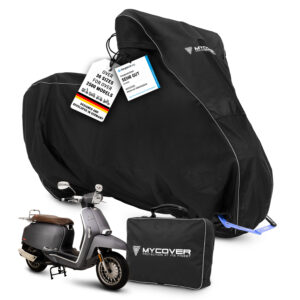
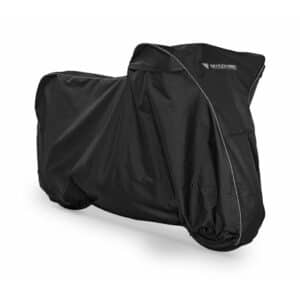
Many bikers are faced with the question of whether they should have their Motorcycle wrapped or painted. The answer is: both methods have their advantages. While a paint job is particularly durable and can be perfectly integrated into the design, wrapping offers the advantage that it can be removed or changed without leaving any residue. If you are not sure, you should seek advice from an expert. For both options, however, protect them well to avoid scratches and dirt, using a high-quality Covers.
There are also various options when it comes to preparation – do you want to paint or powder coat your motorcycle rims? Powder coating is more resistant to external influences, while painting can offer a greater variety of colors and more individual designs.
A motorcycle paint protection film can also be a good solution to protect the paintwork from scratches, stone chips and the effects of the weather. Foliatec motorcycle paint protection film is particularly popular as it is easy to apply and provides a transparent protective layer without changing the carefully considered design of your motorcycle. It extends the service life of the paintwork and preserves the original gloss, so that the motorcycle looks like new even after many kilometers.
-
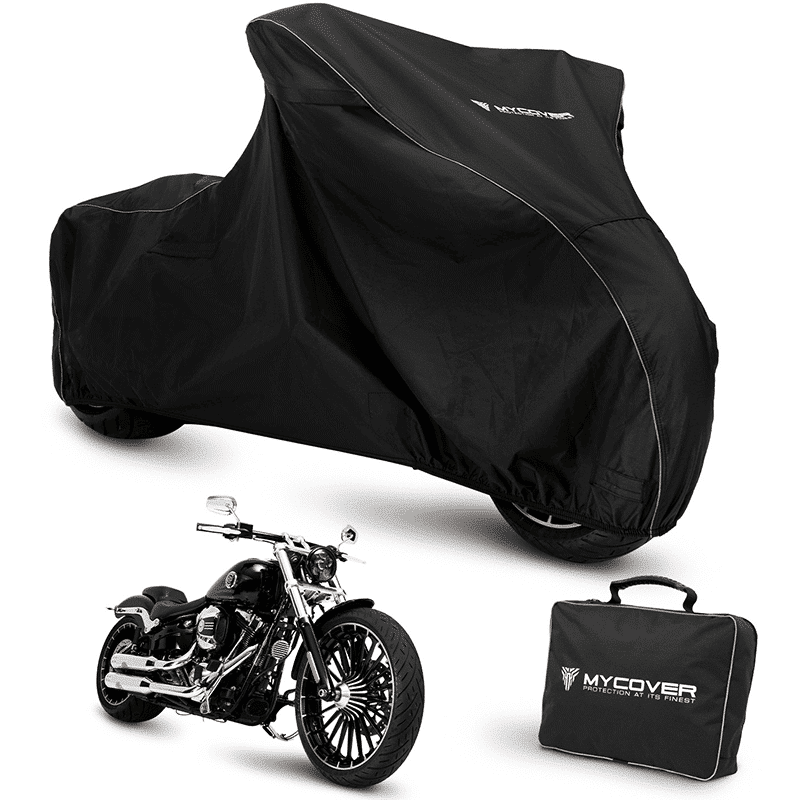
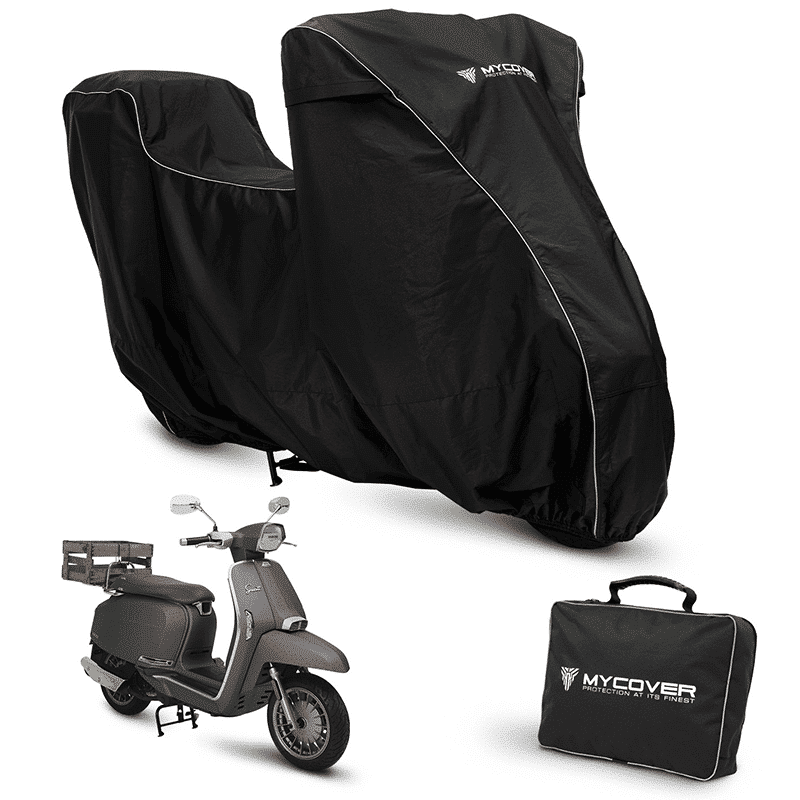
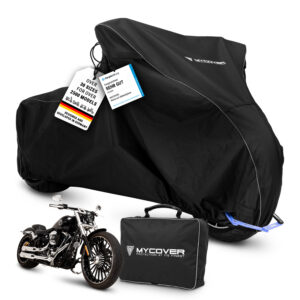
 MYCOVER® Premium Outdoor Motorcycle Cover
Price range: 159,00€ through 279,00€Price range: 149,00€ through 269,00€🏆 Bestseller
🔥 Save 10€ now!
✨ 16 Sizes
-
MYCOVER® Premium Outdoor Chopper Cover
Price range: 189,00€ through 249,00€Price range: 179,00€ through 239,00€🏆 Bestseller
🔥 Save 10€ now!
✨ 8 Sizes
-
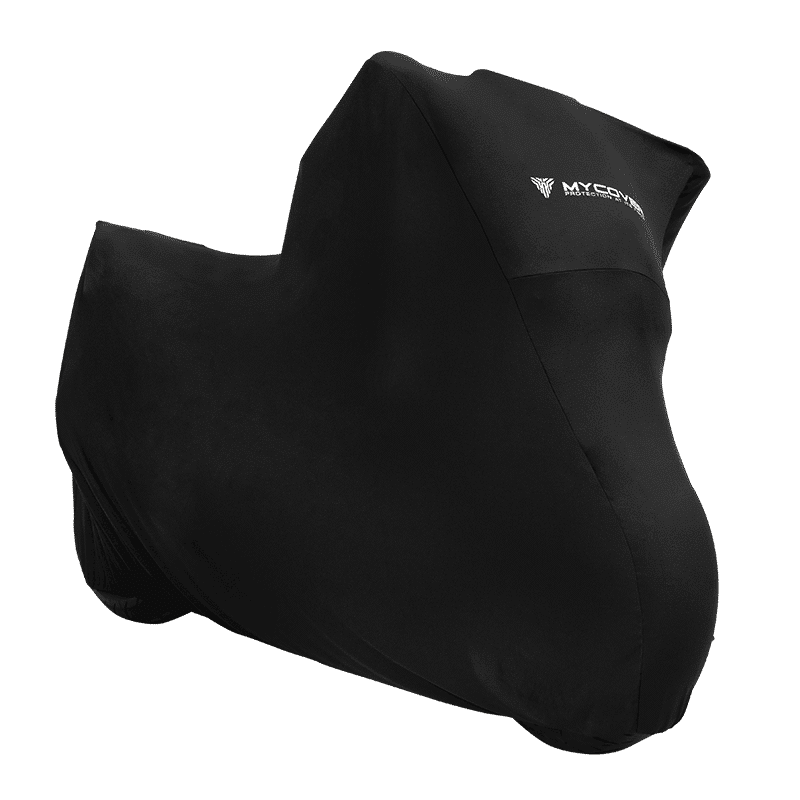
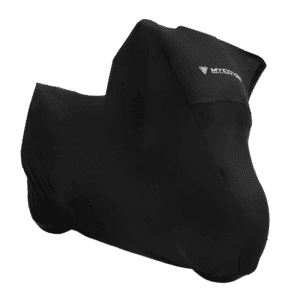
MYCOVER® Premium indoor motorcycle tarpaulinPrice range: 109,00€ through 129,00€
🏆 Bestseller
✨ 4 Sizes
Important tips and advice on motorcycle paintwork
Proper care and maintenance of the paintwork is essential to keep the motorcycle in top condition. If you want to refurbish your motorcycle paintwork, you should first clean the paintwork thoroughly with a gentle cleaner to remove dirt and deposits without damaging the paintwork. It may then be necessary to have the motorcycle paintwork sanded, especially if there are scratches or damage. Minor damage can be repaired with a targeted motorcycle paint repair or by touching up the motorcycle paint.
Motorcycle paint polishing ensures the perfect shine, for which there are various products – a motorcycle paint polish test can help you find the most suitable product for you. After polishing, it is advisable to have the motorcycle paintwork sealed, as this ensures long-term protection against the effects of weather and UV radiation. If you want to protect your motorcycle paintwork, you can also use a high-quality motorcycle paint protection film or a high-quality outdoor Motorcycle covers. If a new paint job is due, the old motorcycle paint must be removed first. In short: regular care, correct protection and proper motorcycle paint cleaning will keep your motorcycle in a shiny and flawless condition at all times.
Motorcycle painters – experts for the perfect paint job
A professional motorcycle painter has the experience and expertise to customize your motorcycle to your exact specifications. Whether you want to have your motorcycle painted or implement special designs. Make sure you choose a workshop that specializes in high-quality motorcycle paints and innovative processes for a long-lasting result.
Motorcycle paintwork pictures can often provide inspiration, showing a variety of design options. From glossy metallic finishes and matt looks to special custom paint finishes, everything is possible – just do some research on the internet.

Motorcycle paint colors: A wide range of options for every style
If you want to give your vehicle a unique look, you now have more choice than ever. The right motorcycle paint colors not only determine the look, but also the style of the entire vehicle. From classic designs to eye-catching special paint finishes – there is a suitable solution for almost every taste.
Flip flop paint & effect paint for the motorcycle
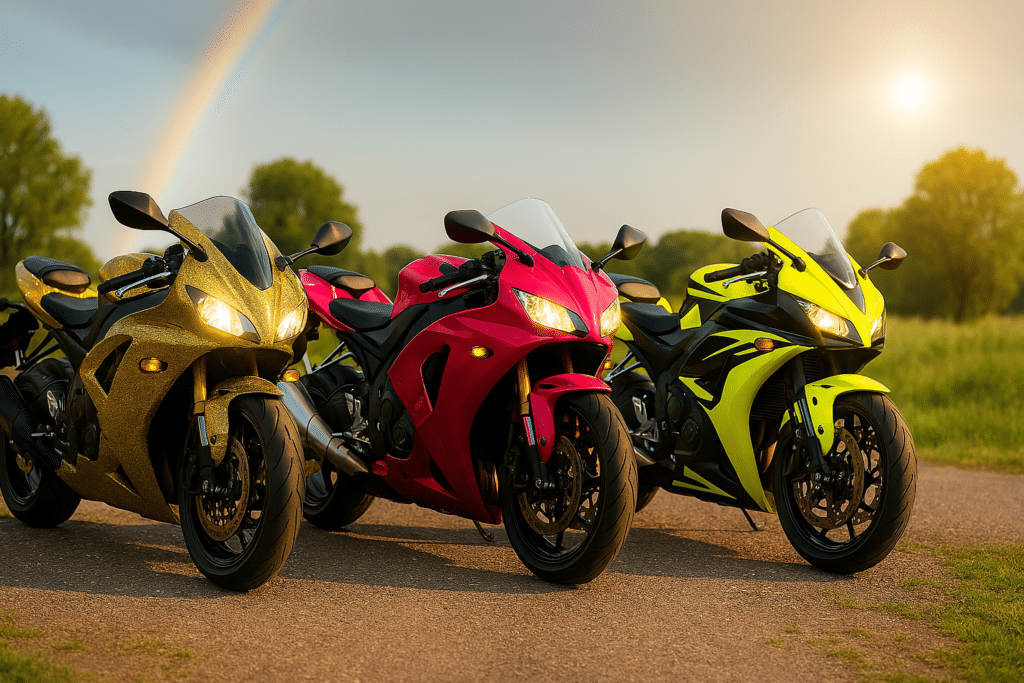
A particularly eye-catching trend is flip-flop motorcycle paint, also known as color-changing paint, because the colors change depending on the incidence of light and create impressive effects. A high-quality motorcycle effect paint with mother-of-pearl, chameleon or metallic inclusions also provides an extravagant finish. If you want even more intensity, you can create glittering accents with motorcycle metal flake paint.
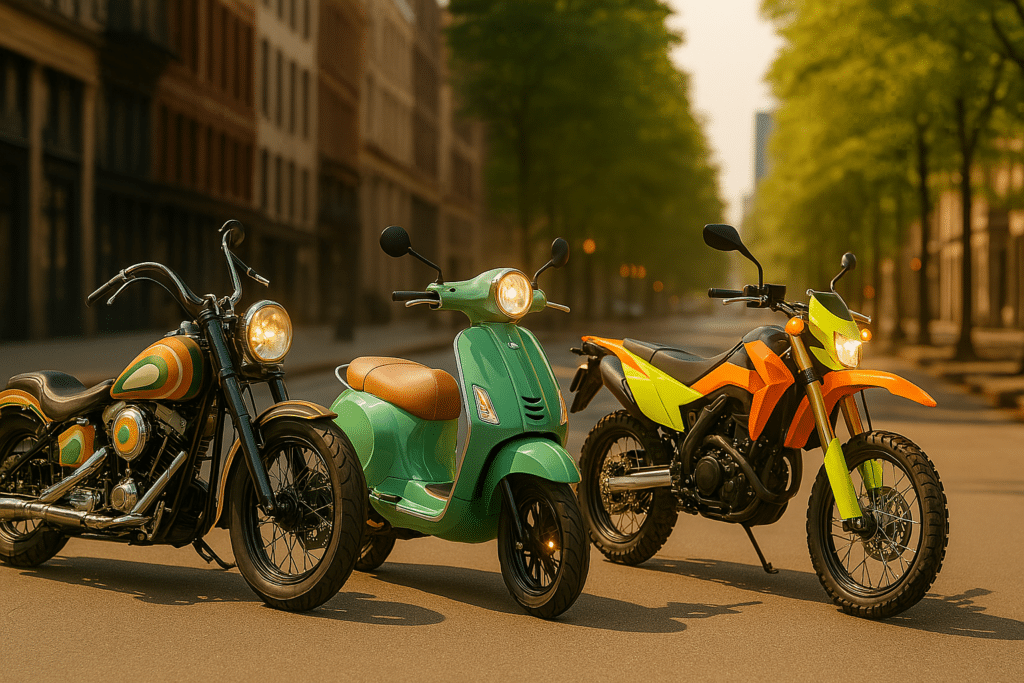
Classic or retro: vintage & patina motorcycle paintwork
For fans of classic motorcycles, the vintage motorcycle paint finish is a stylish choice. Muted colors, matt surfaces and discreet lines are used here. Another option is the motorcycle patina paint finish, which gives the motorcycle an artificially aged look. This method is particularly suitable for café racers, scramblers or custom motorcycles with an old-school character.
Creative & individual: airbrush and comic style
Airbrush motorcycle painting offers almost unlimited creative possibilities – from flames and skulls to realistic motifs. Comic motorcycle painting or motorcycle comic painting is particularly popular at the moment. Motifs are implemented in the typical comic style of motorcycle paintwork – often with outlines, popping effects and color contrasts. A cartoon motorcycle paint job also gives the Motorcycle a unique, playful character.
Cult look: Gulf paint finish for the motorcycle
The Gulf motorcycle paint finish is a real classic among the design variants. Inspired by historic racing, it usually combines a light blue basic design with orange stripes – perfect for retro fans and lovers of iconic racing paintwork.
Painting with spray cans – DIY or professional?
If you want to do it yourself, you can paint your motorcycle with a spray can – a specially developed motorcycle paint spray can is suitable for this purpose, which is tailored to the requirements of two-wheeler surfaces. A motorcycle touch-up pen is used for minor repairs or scratches. This can be used to quickly and easily repair punctual paint damage. If you want to paint larger parts, RH Motorradlacke offers a wide selection of colors, primers and clear coats for a long-lasting surface.
Raptor & Candy lacquer for robust or intensive designs
When it comes to particularly resistant coatings, the Raptor motorcycle paint is a popular choice. It not only offers extreme resilience, but also a striking structure and matt appearance – ideal for adventure or off-road motorcycles. If, on the other hand, you are looking for depth and color intensity, you will be delighted with a Candy motorcycle paint finish. This multi-layer technology ensures brilliant effects, especially in direct sunlight.
To protect your precious paintwork, we recommend using a high-quality cover for both indoor and outdoor use to protect your motorcycle from dirt and scratches.
-
MYCOVER® Premium Outdoor Motorcycle Cover
Price range: 159,00€ through 279,00€Price range: 149,00€ through 269,00€🏆 Bestseller
🔥 Save 10€ now!
✨ 16 Sizes
-
MYCOVER® Premium Outdoor Chopper Cover
Price range: 189,00€ through 249,00€Price range: 179,00€ through 239,00€🏆 Bestseller
🔥 Save 10€ now!
✨ 8 Sizes
-
MYCOVER® Premium indoor motorcycle tarpaulinPrice range: 109,00€ through 129,00€
🏆 Bestseller
✨ 4 Sizes
The right color choice for your motorcycle paint job
Choosing the right motorcycle paint color is a crucial step when redesigning your vehicle. Many workshops or manufacturers offer a motorcycle color configurator that allows you to try out different designs and colors virtually. A comprehensive motorcycle paint color palette helps you find the ideal shade for your style – from classic to eye-catching. Popular options are white motorcycle paint for a clean look, black motorcycle paint for timeless elegance or gray motorcycle paint for a modern, understated look. If you want to set a sporty accent, go for neon motorcycle paint in bright colors such as green or orange. The matt black motorcycle paint finish, which ensures a minimalist appearance, is also particularly popular.
Here is some brief advice to give you a rough overview:
- Classic & timeless → Black, white, silver (plain or metallic)
- Sporty & modern → matt gray, racing colors, candy red, blue metallic
- Retro & iconic → Gulf paintwork, cream white, British Racing Green
- Individual & expressive → airbrush, flip-flop, chameleon
- Raw & functional → Raptor paint, sand color, olive green (military style)
Conclusion: Perfect paintwork for every motorcycle
Whether it’s the paint for the motorcycle engine, the paint for the motorcycle exhaust or an individual style with a motorcycle tank without paint – the right choice of paint and a professional finish are crucial. A high-quality coating not only protects against weathering and corrosion, but also ensures an impressive appearance. In conclusion, if you want to add a touch of color, you can enhance the look of your motorcycle with motorcycle brake caliper paint and at the same time protect the brake calipers from dirt and wear. Because with the right paintwork, every motorcycle becomes individual, durable and stylish.
Frequently asked questions about motorcycle painting
How much does it cost to paint a motorcycle?
The cost of painting a motorcycle depends heavily on the scope and the painting method. A simple paint job often starts at €300-500, while elaborate designs or effect paintwork can cost over €1,000. Individual requests or special paints also drive up the price.
Painting a motorcycle engine without removing it – is that possible?
Yes, you can paint the motorcycle engine without removing it, but the preparation is time-consuming. The engine must be thoroughly cleaned, masked and degreased. A heat protection coating is mandatory so that the coating can withstand the engine operating temperatures.
Painting motorcycle engines – which paint is suitable?
Which paint is used for motorcycle engine painting is crucial for durability. Heat-resistant paints with a temperature resistance of at least 600 °C are recommended – ideally based on ceramic or epoxy resin.
Painting motorcycle tanks – which paint is suitable?
When painting motorcycle tanks, you should use solvent-resistant 2K paints, as otherwise petrol vapors can damage the paint. An additional clear coat provides protection and gloss.
Painting your motorcycle – which color to choose?
If you are asking yourself: “Which color to paint your motorcycle”, you should consider both visual preferences and practical aspects. Light colors increase visibility, dark tones look classy. For an individual look, effect paints, candy colors or matt paints are ideal.
Painting a motorcycle – how much paint is needed?
Here is a rough guide: For a complete paint job (tank, trim, side panels), approx. 1-1.5 liters of basecoat are required, plus clearcoat and primer if necessary. The quantity may vary depending on the color and technique.
Which motorcycle parts can be painted?
Typical parts that can be painted are the tank, fairing, mudguards, side covers and rims. Smaller components such as mirror housings or frame covers can also be customized.
What painting methods are available for motorcycles?
There are various painting methods, including classic wet painting, powder coating and airbrush techniques. The choice of method depends on the desired effects, durability and budget.
Can I paint my motorcycle myself?
Yes, with the right equipment and a little experience, it is possible to paint your motorcycle yourself. It is important to have a clean working environment, suitable protective clothing and to follow the correct work steps in order to achieve a satisfactory result.
How long does a professional motorcycle paint job take?
The duration of a professional paint job depends on the scope of the work. As a rule, you should expect a processing time of 1 to 2 weeks, including preparation, painting and drying time.
What preparations are necessary before painting?
Before painting, the parts must be thoroughly cleaned, degreased and sanded. Old layers of paint should be removed or sanded down to ensure good adhesion of the new paint.
What is the difference between wet painting and powder coating?
Wet painting uses liquid paints that are sprayed on and then dried. Powder coating, on the other hand, uses powder paints that are applied electrostatically and then baked in an oven. Powder coatings are generally more robust, but are not suitable for all parts.
How do I maintain the new paintwork on my motorcycle?
After painting, the motorcycle should be cleaned regularly and treated with suitable care products. Avoid aggressive cleaning agents and protect the paintwork from excessive sunlight and mechanical damage.